 JinjaConsolidated
A step-by-step checklist for verifying land in Uganda: official searches, site visits, surveys, local council checks and using an advocate.
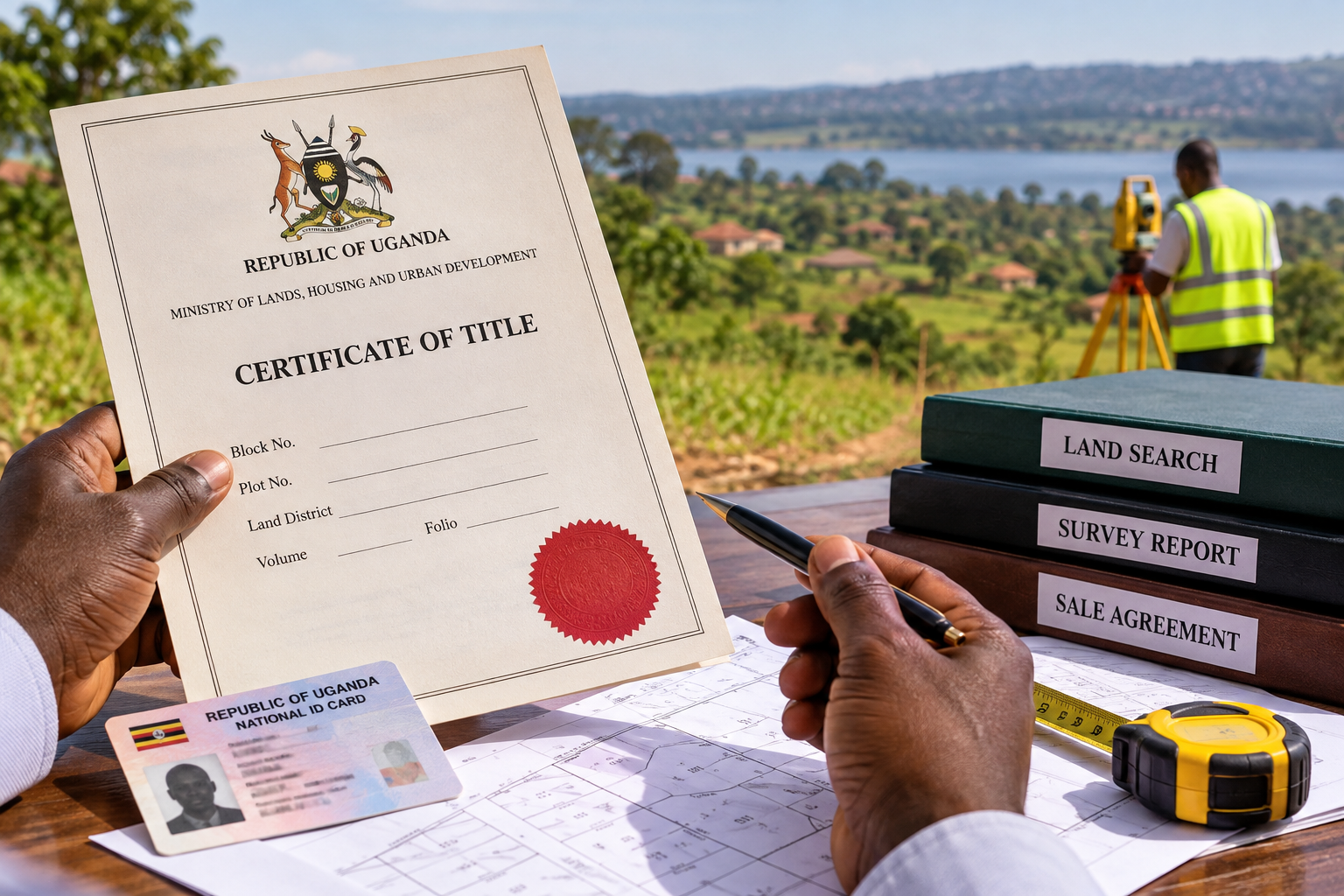
Land is the most common property purchase in Uganda — and the one where buyers most often lose money through fake titles, double sales or unresolved occupants. These checks will protect you whether you are buying a plot in Jinja or anywhere else in the country.
Table of contents [Show]
Ask for a photocopy of the certificate of title and the seller's national ID. The name on the title should match the seller, or the seller should hold a valid power of attorney or letters of administration.
Take the title details (block and plot number, or volume and folio) to the Ministry of Lands, Housing and Urban Development zonal office that covers the land — for Jinja, the Jinja zonal office — and request a search. The search report shows the registered owner and any caveats, mortgages or other encumbrances. Many searches can also be started through the ministry's online land information system.
Walk the boundaries, look for boundary marks, and check for people living on or using the land. On mailo land in particular, occupants (bibanja holders) may have legal rights that a new owner must respect.
Neighbours and the LC1 chairperson usually know who owns and uses land in the area, and whether there are disputes.
A registered surveyor can open the boundaries and confirm that the land on the ground matches the plot on the title.
Have an advocate draft the sale agreement, witness signatures and handle the transfer forms. Pay through traceable channels, not cash, and only after the checks above.
Interested in land in Jinja? Browse our land listings or book a site visit. We will help you get the documents you need for your own checks.
This guide is general information, not legal advice.
Honest listing photographs, clear check-in and a more reliable guest experience.
A consistent checklist for access, utilities and repairs — and how our agent-led viewings work.